Located in southern Fukuoka Prefecture, the naturally rich city of Yame. While this region is famous for Yame tea, it has another important traditional craft: Yame hand-made Japanese paper. Using the pure waters of the Yabe River and locally grown kozo (paper mulberry) nurtured by the rich natural environment, the art of papermaking with over 400 years of history continues to be passed down today.
Quietly continuing his work is Mr. Toshikazu Mizota. We visited “Mizota Washi,” the oldest paper workshop in Kyushu, situated along the Yabe River flowing through southern Fukuoka Prefecture, with the lush greenery of Yame tea fields as its backdrop.
What exactly is hand-made Japanese paper?
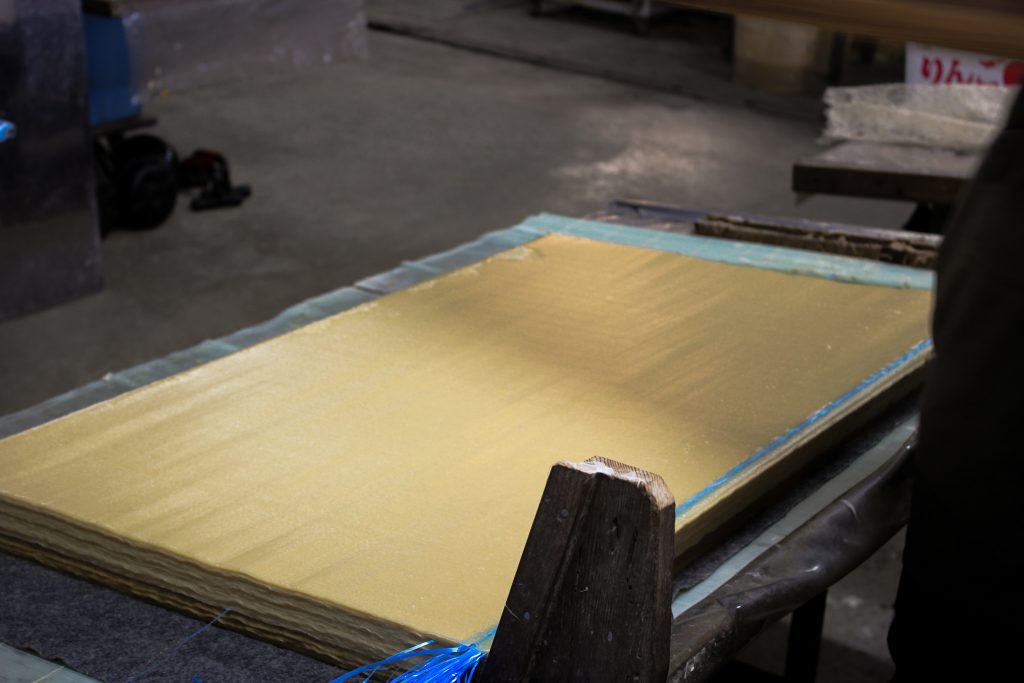
As the name suggests, it is Japanese paper that is made one sheet at a time by hand.
Mr. Mizota’s paper plays a vital role in preserving Japan’s history for the future, being essential for the restoration of cultural properties (such as the Tsushima Sō Family documents and Tokyo Museum materials) and the creation of artistic works. Hand-made Japanese paper is a uniquely Japanese traditional craft, and its restoration techniques are recognized as world-class.
Master Craftsmanship
Here in Yame, there is a papermaking method boasting 400 years of history, and each piece is carefully finished using these traditional techniques.
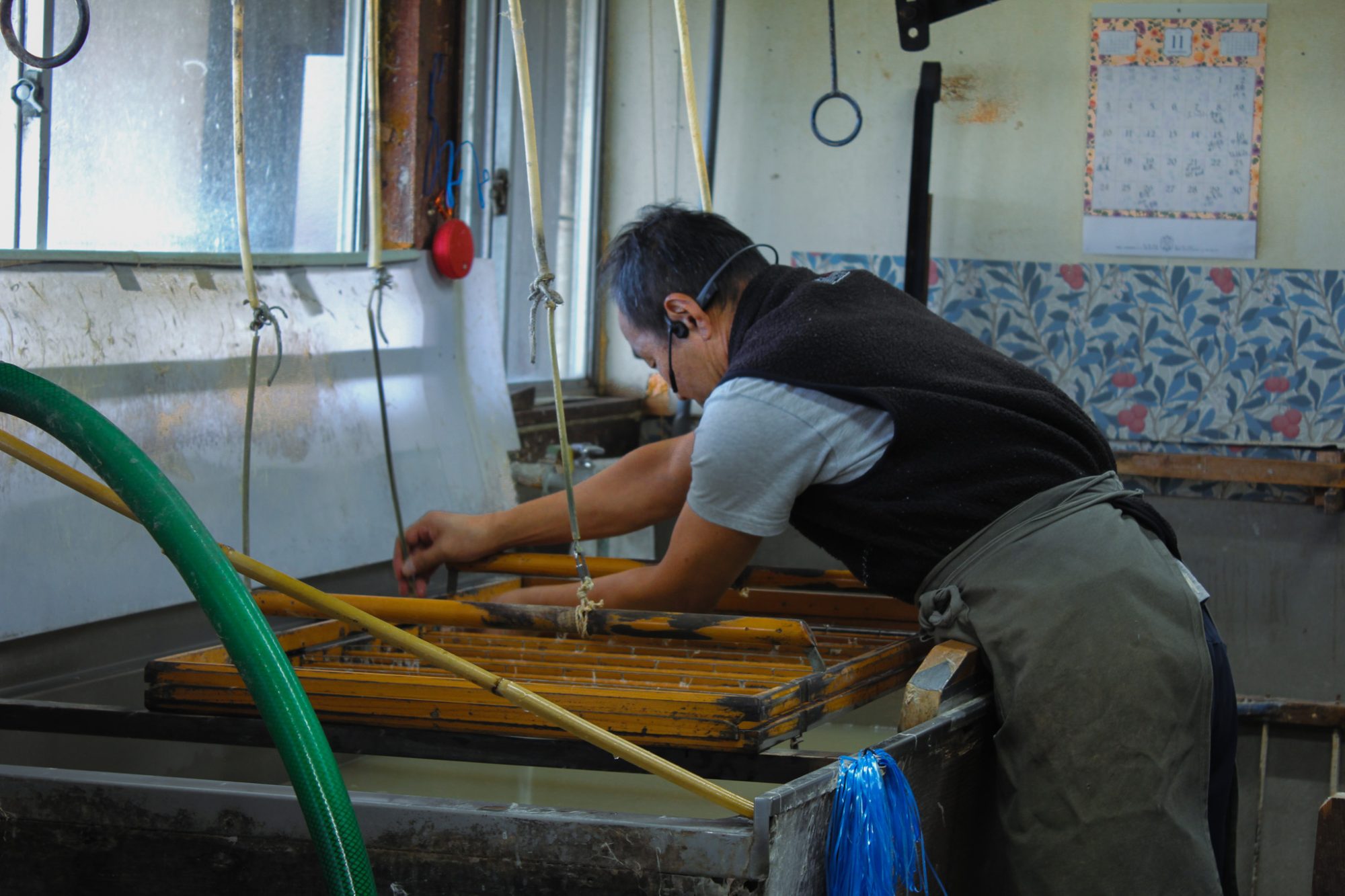
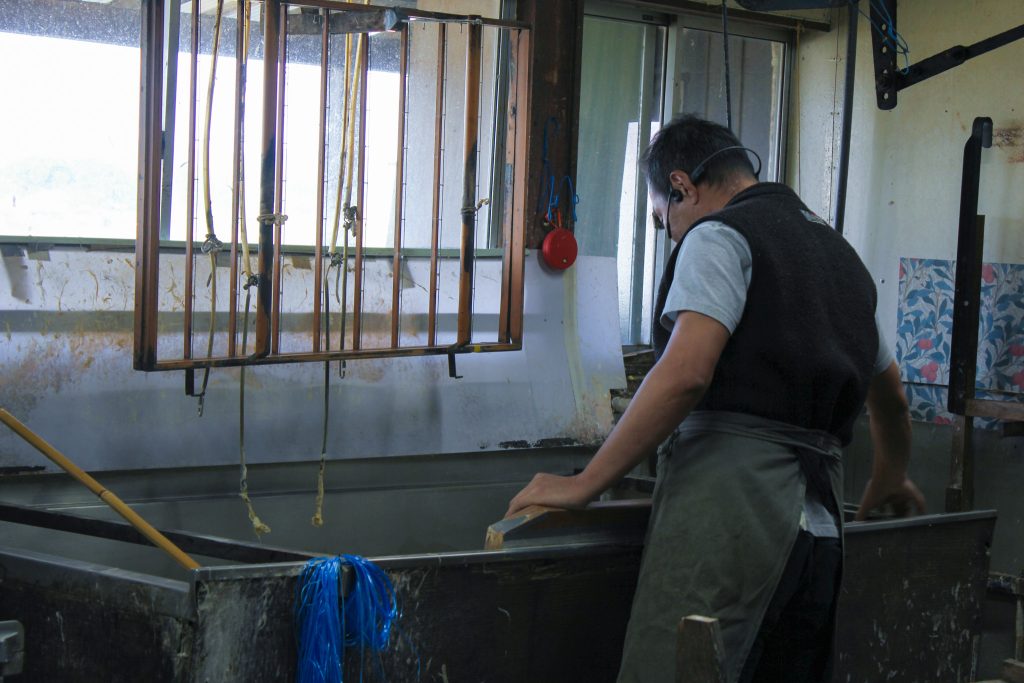
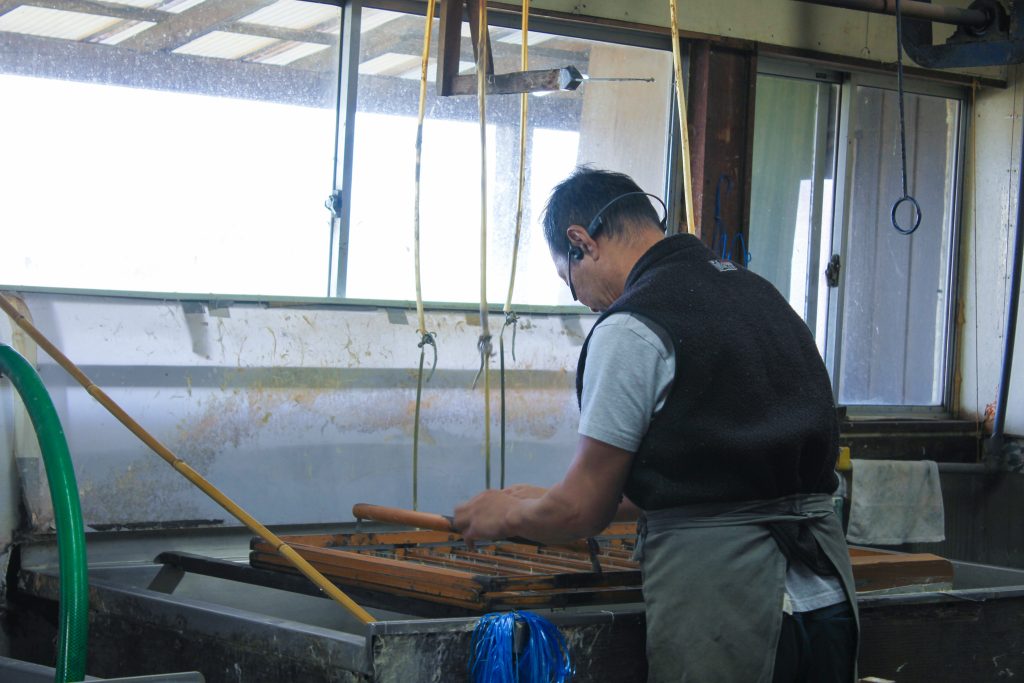
In papermaking, the most skillful part is the paper-scooping process.
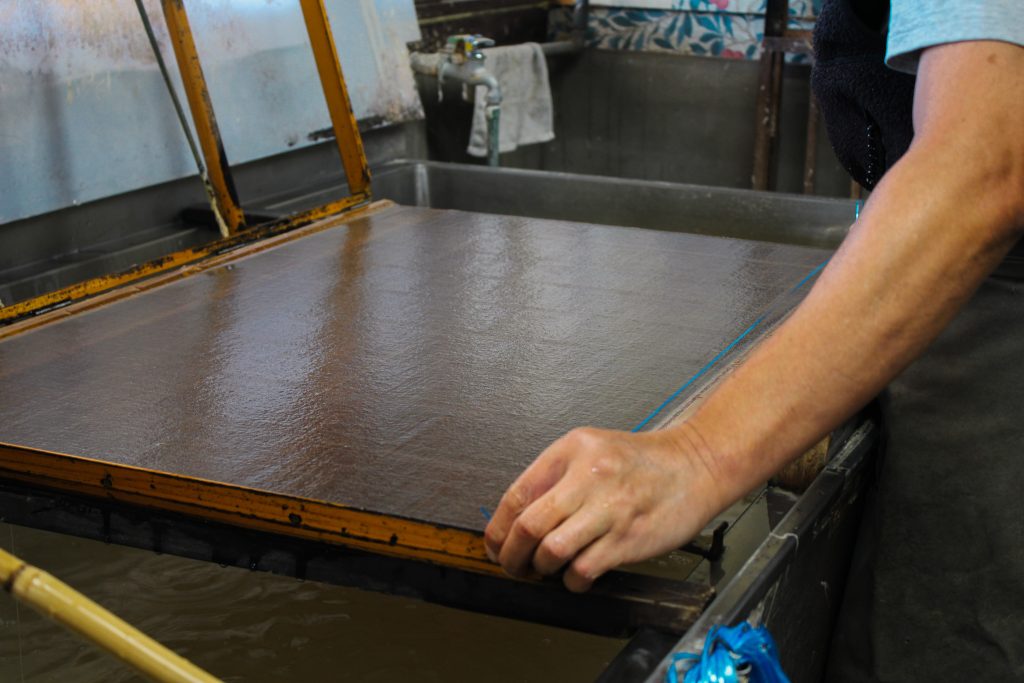
With just a few movements back and forth and side to side, a single sheet of paper with uniform thickness and strength is created. Each sheet contains the weight of deep technical expertise that cannot be expressed by sensation alone, accumulated through 30 years of experience.
What is the raw material?
It’s the kozo tree. In ancient times, it was called “kamiso” and was used as material for paper clothing and sacred hemp (kamiso) offered to the gods. It’s said that over time, the name “kamiso” evolved into “kozo.”
There’s a clear reason why Japanese paper is made from kozo trees. It’s because kozo contains less lignin (the substance that forms wood). When paper contains lignin, it deteriorates easily – for example, this is why newspapers turn red and become brittle when exposed to sunlight.
The kozo from Yame is grown in Kyushu, and its characteristic is that it has long fibers that intertwine firmly with each other. This results in strength that surpasses ordinary Japanese paper.
Of course, the preparation process also showcases the craftsman’s meticulous attention to detail.
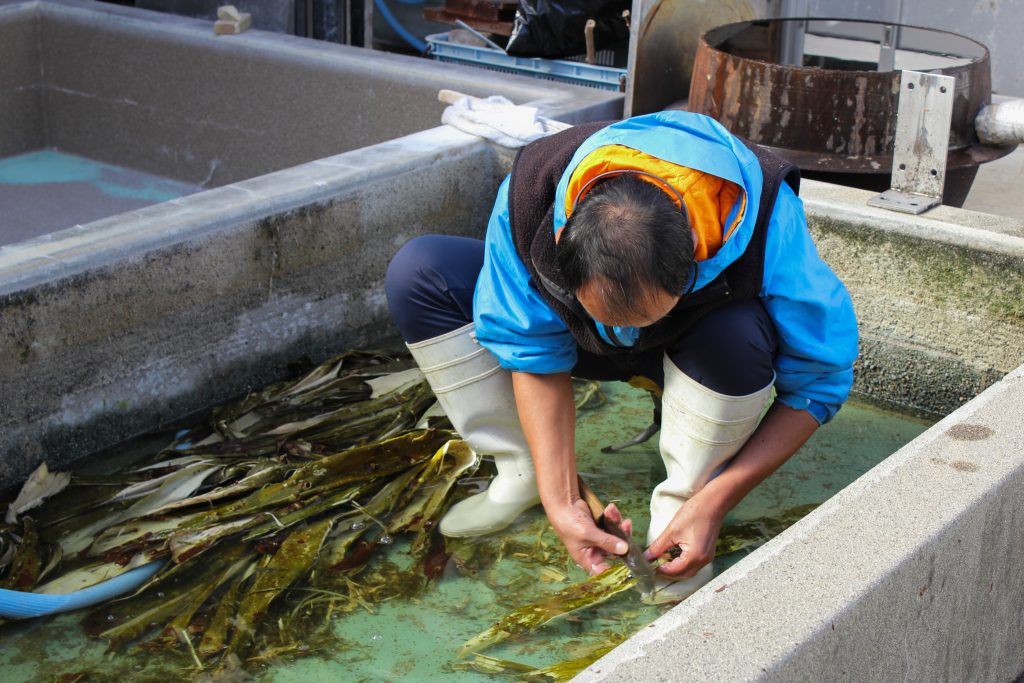
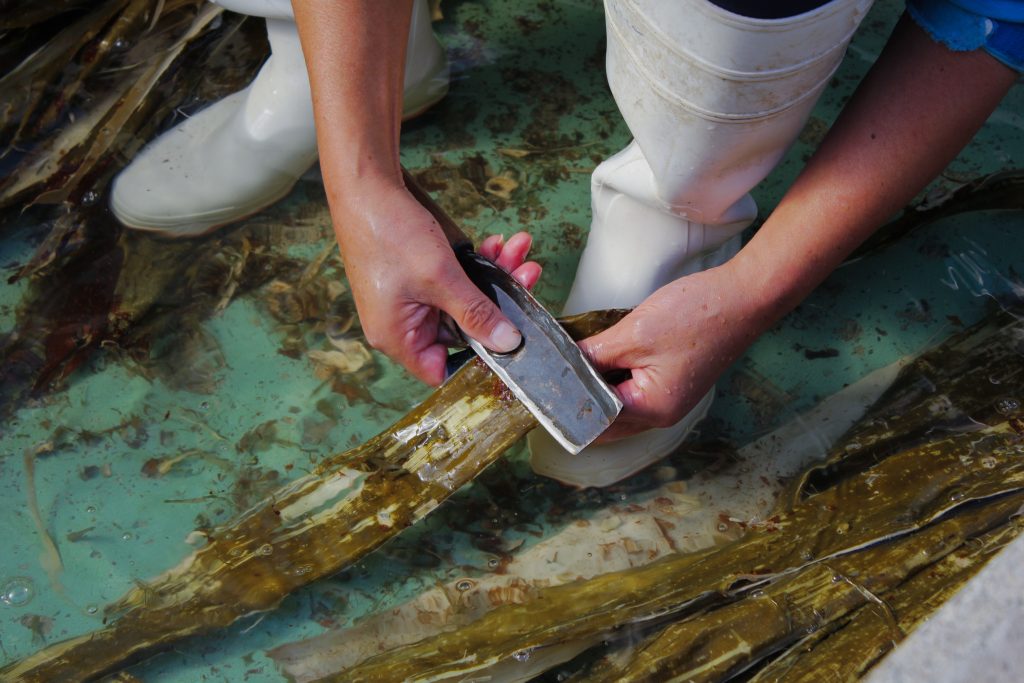
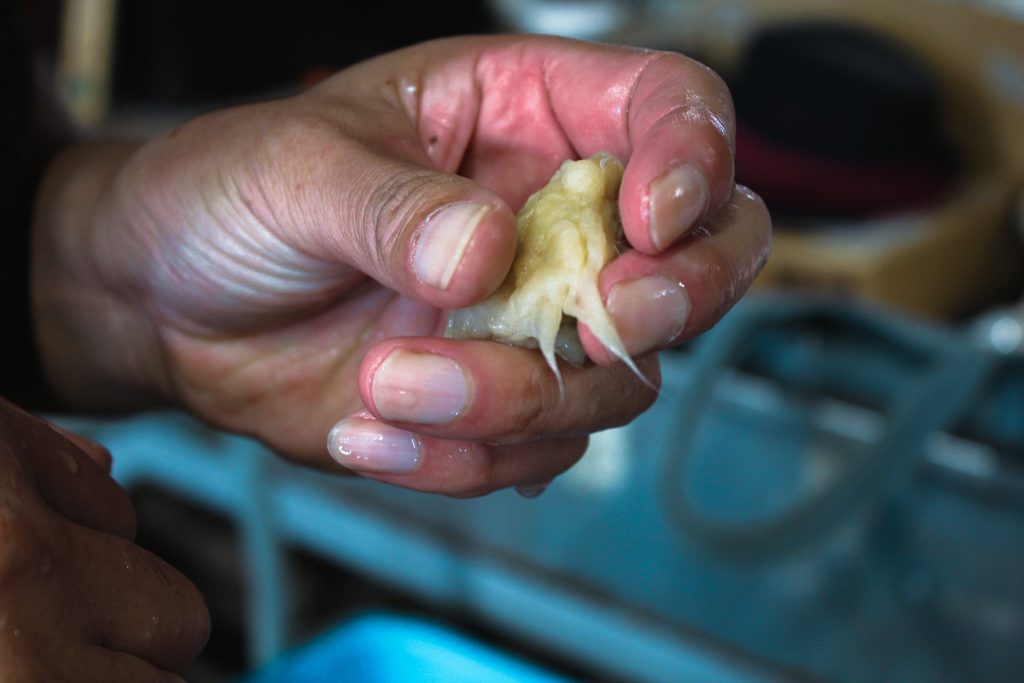
Mr. Mizota takes particular care in removing impurities. He carefully removes the red bark of poor-quality fibers one by one with a knife, leaving only the white fibers.
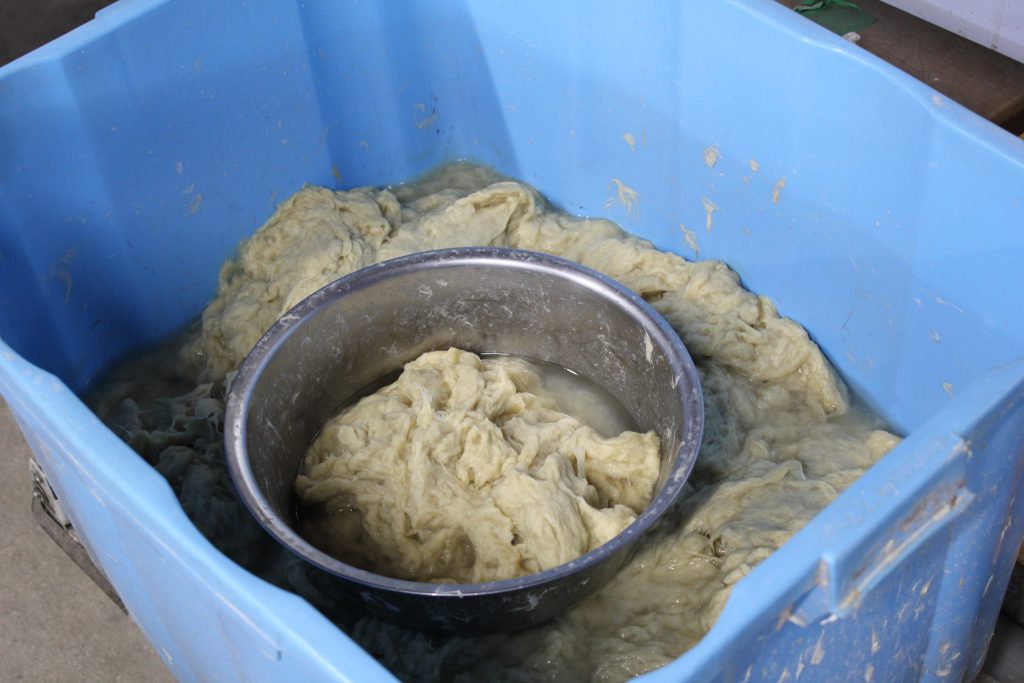
Also, unlike regular Japanese paper, he uses weak alkaline for boiling as strong alkaline would damage the fibers.
When asked “What thoughts go into making your paper?”
“We must preserve artworks in their original condition (reversibility). That’s why we put such careful effort into making it. We have a responsibility to preserve history, and this is one way we help with that.” According to Mr. Mizota, the image is “like turning wood directly into paper…”
Indeed, this made sense given the primitive process that uses all hand work and no chemicals.
Thoughts for the Next Generation
The Mizota Washi workshop, which works to convey its appeal overseas and welcomes many visitors, shared with us their detailed thoughts about future prospects.
When asked about how they want to present the workshop in the future,
“We don’t want to turn the workshop into a tourist attraction. However, we feel we should cooperate in regional development as part of Yame’s culture. But we want to welcome people who are genuinely interested in Japanese paper. We especially want artists to visit. In fact, the majority of our visitors are artists. We don’t charge admission fees. This is also because we want to avoid becoming a tourist attraction.”
Currently, “washi” paper is also being manufactured and sold in Korea and China.
Amid this situation, Mr. Mizota expressed his desire for more people to know about the unique excellence of Japanese washi.
Yame hand-made Japanese paper has continued for over 400 years. The techniques passed down through generations now play a crucial role in restoring cultural properties and connecting them to the future. It’s not just paper, but a symbol of Japanese culture woven by human hands.
Finally, I believe that Yame hand-made Japanese paper is one reason why this city, Yame, is known for its many craftsmen. For example, in lantern making, the flexibility and strength of the paper enable both beauty and durability. Yame washi is not just a paper product; it functions as a “foundation” that shapes Yame’s traditional culture and connects the skills and passion of its craftsmen.
Kozo began as kamiso, connecting gods and humans. It became washi, passed down from the past to the present. This paper has created new culture through the hands of various craftsmen, shaping the city of Yame. And now, it directly connects history to the future through the preservation of cultural properties. In this way, things passed down from past to present and future influence each other, creating greater value. Yame’s washi paper, while inheriting tradition, might be crucial in connecting the present to the future. Its role in weaving the future truly symbolizes a culture to be proud of. From Yame to the world—expectations for the future connected by washi continue to grow.
===
Mizota Washi
Address: 708-2 Yanase, Yame City, Fukuoka Prefecture